


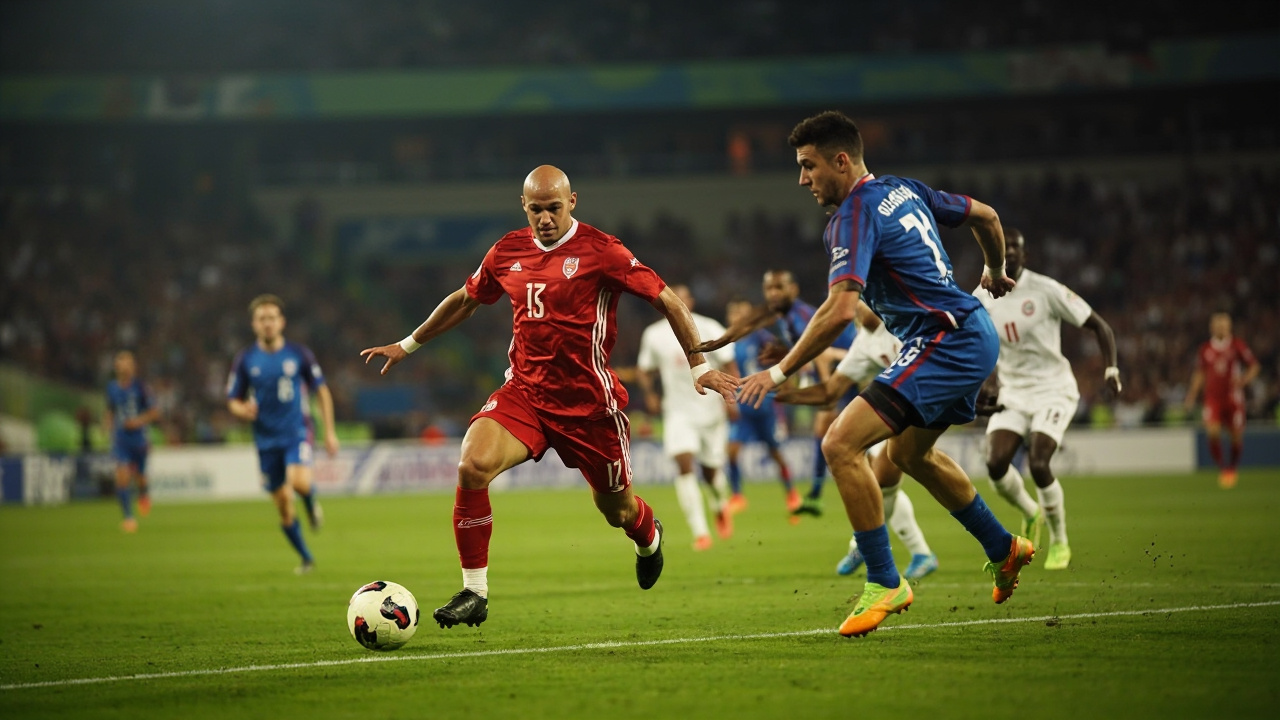
In the storied annals of European football, few figures embody the complex intersection of sport, politics, and national identity quite like Ernest Wilimowski. Born in 1916 in Kattowitz (now Katowice) when it was still part of the German Empire, Wilimowski’s career trajectory would be forever shaped by the turbulent geopolitics of 20th century Europe, particularly the shifting borders and allegiances of his native Silesia.
Known for his extraordinary technical ability and goal-scoring prowess, Wilimowski’s legacy remains contentious to this day – a football genius whose career spans two national teams and whose story raises profound questions about loyalty, circumstance, and personal choice during history’s darkest chapter.
Pre-war brilliance: Poland’s football sensation
Before World War II erupted across Europe, Wilimowski had established himself as Poland’s premier footballer. His exceptional talent was most dramatically displayed during the 1938 World Cup in France where he scored four goals in a single match against Brazil – a remarkable feat that would stand as a record for decades.
Playing primarily for Ruch Chorzów, Wilimowski helped secure multiple Polish league championships during the 1930s. His dazzling dribbling skills and clinical finishing made him one of Poland’s most talented footballers of his era, perhaps of all time. With 21 goals in just 22 matches for the Polish national team, his trajectory seemed destined for footballing immortality.
Technical brilliance and playing style
Wilimowski possessed rare technical gifts that set him apart. Known for his close control and acceleration, he could dribble past multiple defenders with remarkable ease. His finishing was equally impressive, capable of scoring with either foot and from various angles. These abilities made him a revolutionary forward for his time.
Cultural impact in pre-war Poland
Before the war, Wilimowski had become a genuine sporting icon in Poland. His performances generated immense national pride during a period when the country was still establishing its identity after regaining independence. His heroics in Polish colors represented more than sporting achievement – they symbolized national potential on the world stage.
The controversial wartime transition
The Nazi invasion of Poland in 1939 dramatically altered Wilimowski’s life trajectory. As Germany annexed Upper Silesia, many residents with mixed heritage faced impossible choices regarding their allegiances and identity. Wilimowski, like many Silesians, signed the “Volksliste” declaring German ethnicity – a decision that would permanently complicate his legacy.
By 1941, he was representing the German national team, ultimately appearing in eight matches and scoring 13 goals. This transition from Polish hero to German international during wartime occupation forms the core of the enduring “hero or traitor” debate that surrounds his memory.
The pressure of historical circumstances
The complexity of Wilimowski’s situation cannot be overstated. Upper Silesia’s contested history and mixed Polish-German population created an environment where ethnic identity was fluid and often politically determined. Under Nazi occupation, refusing to acknowledge German heritage could lead to severe consequences, including deportation or worse.
Post-war consequences and exile
Following the war, Wilimowski found himself effectively exiled from Poland, where he was widely viewed as a traitor. He continued his club career in Germany but never recaptured his pre-war prominence. Despite attempts to return to Poland, he remained unwelcome in his homeland, a painful rejection that lasted until his death in 1997.
Conclusion
Ernest Wilimowski’s story transcends football, serving as a poignant reminder of how geopolitical forces can shape individual lives and legacies. His sporting brilliance remains undisputed, yet his memory continues to provoke debate about national loyalty, personal choice under duress, and how we judge historical figures across the complex moral landscape of wartime Europe.
As historians and football enthusiasts reconsider his case with greater nuance, Wilimowski stands as a compelling symbol of Silesia itself – caught between nations, identities, and competing historical narratives that resist simple categorization.


