


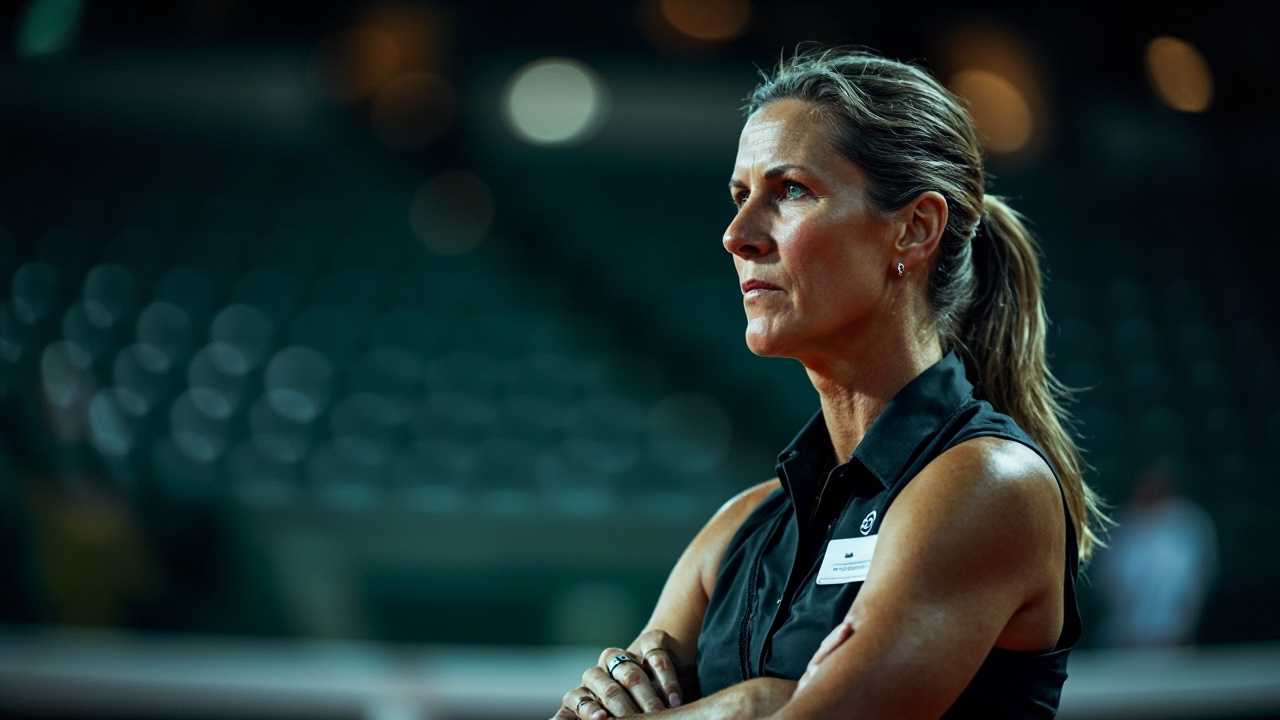
The ongoing debate surrounding Amélie Mauresmo’s tenure as French Open tournament director has once again erupted into controversy. At the center of the storm lies the scheduling of night sessions at Roland Garros, with critics pointing to a striking imbalance: since night sessions were introduced in 2021, only four of 44 matches showcased on Court Philippe Chatrier under the lights have featured women’s singles encounters. This glaring disparity has ignited passionate responses from players, officials, and tennis fans worldwide, questioning the tournament’s commitment to gender equality.
As the legendary clay courts of Paris continue to host the world’s elite tennis players, the scheduling decisions made behind the scenes have become as hotly contested as the matches themselves. Mauresmo’s justifications for these choices have drawn scrutiny from all corners of the tennis world, creating a microcosm of the broader struggles for equity in professional sports.
Mauresmo’s statements and justifications
Since taking the helm as tournament director, Mauresmo has consistently defended her scheduling decisions with several key arguments. Central to her defense is the issue of match length – men’s matches, played as best-of-five sets, naturally offer more court time than women’s best-of-three format. “Since men’s tennis is played at the best of five sets, at least three sets would be played,” Mauresmo stated, suggesting this provides better value for night session ticket holders.
When faced with accusations of gender bias, Mauresmo has been quick to reject any suggestion that women’s tennis isn’t worthy of primetime slots. “The message has never been that the girls are not worthy to play at night. It’s never been this,” she insisted to BBC Sport. Despite these assurances, her previous comments have fueled controversy, particularly her 2022 statement suggesting men’s matches have “more attraction, more attractivity” – remarks she later apologized for, claiming they were “taken out of context.”
WTA player and representative responses
The reaction from the women’s tour has been passionate and direct. Tunisian star Ons Jabeur didn’t mince words, suggesting that the decision-makers lacked empathy: “I hope whoever is making the decision, I don’t think they have daughters, because I don’t think they want to treat their daughters like this.” Her powerful statement resonated throughout the tennis community, highlighting the frustration felt by many female competitors.
World number one Iga Swiatek offered a more personal perspective, stating: “Every year, we talk about it. My position didn’t change: I like playing days, so I’m happy that I’m done and I can have a longer rest.” While Swiatek’s preference for daytime matches is clear, her comments don’t address the systemic inequities that continue to shape the tournament’s scheduling practices.
Media and public reaction
The controversy has sparked intense media coverage and public debate. Many analysts have framed the scheduling dispute as symptomatic of deeper gender inequities in professional sports. As noted by BBC Sport, “Questions are raised every year about whether the French Open should do more to promote the women’s game,” highlighting the persistent nature of these concerns.
The discussion extends beyond tennis, reflecting broader patterns of gender inequality in sports, similar to the Caitlin Clark Angel Reese flagrant foul controversy that divided basketball fans. Such parallels demonstrate how gender disparities continue to shape conversations across the sporting landscape.
Broader implications and context
The scheduling debate at Roland Garros reflects more significant issues regarding the commercial valuation and media representation of women’s sports. While tournament organizers often cite audience preferences and commercial considerations, critics argue that such reasoning creates a self-perpetuating cycle: less exposure leads to lower viewership, which is then used to justify further marginalization.
The French Open’s scheduling practices stand in stark contrast to other Grand Slams. Both the US Open and Australian Open typically schedule women’s matches during their night sessions, demonstrating a greater commitment to gender balance. This disparity has prompted calls for the French Open to follow suit and embrace more equitable scheduling policies.
These challenges mirror similar struggles in other sports, as evidenced by recent controversies regarding transgender women facing new restrictions in women’s soccer, highlighting how gender equality remains a contentious issue throughout the sporting world.
Historical context of night session scheduling at the French Open
The introduction of night sessions at Roland Garros is relatively recent, beginning only in 2021. However, the pattern of prioritizing men’s matches was established early and has remained consistent. The stark statistic – only four women’s matches out of 44 night sessions – illustrates a deeply entrenched imbalance that has persisted despite increased scrutiny and criticism.
This modern scheduling controversy exists within France’s complex history regarding women in sports. The country has a rich legacy of female athletic pioneers, as explored in The Clermont Maidens: a journey through the pioneering era of women’s sports in France. This historical context makes the current disparities all the more striking when considering France’s role in advancing women’s participation in sports.
Conclusion
As the debate continues, the French Open faces mounting pressure to reevaluate its scheduling practices and demonstrate a stronger commitment to gender equality. While Mauresmo has pledged improvements, concrete changes have been slow to materialize, suggesting that addressing these deeply ingrained biases remains challenging.
The controversy surrounding Roland Garros’s night sessions serves as a powerful reminder of the ongoing struggles for equity in professional sports. Beyond the clay courts of Paris, it reflects broader societal questions about how we value women’s athletics and the responsibility of sporting institutions to promote equal representation. As this tournament evolves, its handling of these issues will likely remain under intense scrutiny from players, media, and fans alike.


