


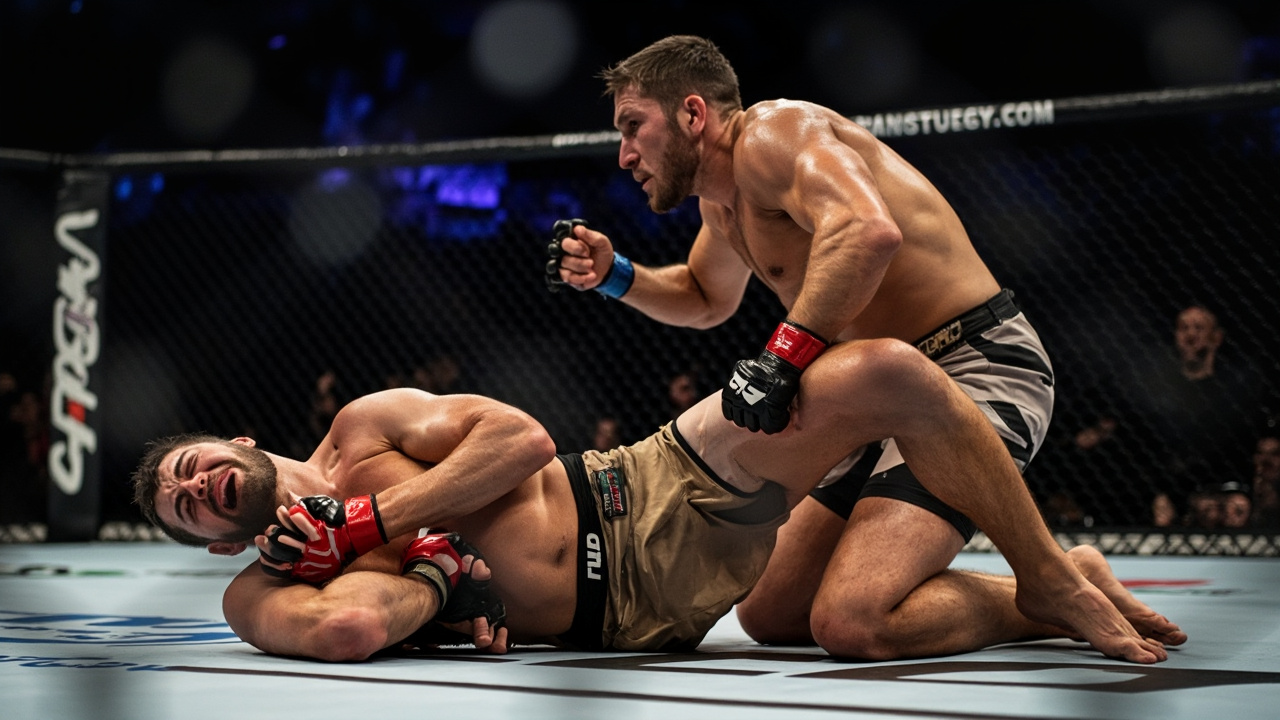
The UFC Des Moines card delivered what might be the most significant middleweight upset of 2025 as Reinier de Ridder brutally stopped the heavily-favored Bo Nickal via second-round TKO. What was supposed to be another stepping stone in Nickal’s meteoric rise instead became a harsh reality check, as the former ONE Championship double-titleholder dismantled the wrestling phenom with a perfectly placed liver shot that crumpled him to the canvas.
The shocking outcome has sent ripples throughout the MMA community, with fighters, analysts, and fans all weighing in on what this means for both men’s careers. Let’s break down exactly what happened in this stunning reversal of expectations that has completely reshaped the middleweight landscape.
UFC Des Moines: Reinier de Ridder vs. Bo Nickal – A study in hype derailed
Knockout sequence
The fight-ending sequence began against the cage in round two, where De Ridder transformed from grappler to calculated aggressor. After herding Nickal backward with a series of short, chopping punches, De Ridder sensed his moment as Nickal attempted to circle away. With the precision of a seasoned hunter, the Dutchman cut off the angle and landed a glancing right hook that momentarily disrupted Nickal’s balance.
Moving into the clinch, De Ridder delivered two quick knees to Nickal’s lead leg before timing a perfectly placed left knee directly into Nickal’s liver. The shot’s placement was surgical – angled precisely under the floating ribs on the right side of Nickal’s abdomen. The result was immediate and dramatic: Nickal folded forward in agony, collapsing to the canvas at 1:53 of round two, bringing a merciful end to what many had predicted would be another showcase victory for the American prospect.
Fighter backgrounds and hype
Bo Nickal entered the octagon with a pristine 6-0 record and the weight of unprecedented expectations. A three-time NCAA Division I National Champion and Hodge Trophy winner, Nickal wasn’t just promoted as a future contender – he was ordained as a future champion by many in the MMA media ecosystem. His confident pre-fight proclamations included dismissals of higher-ranked fighters and even a controversial claim about being able to defeat a chimpanzee.
Reinier de Ridder, by contrast, came in as the seasoned veteran with a 19-2 record. The former two-division ONE Championship titleholder brought high-level grappling credentials of his own, having submitted notable fighters like Aung La N Sang. Despite his impressive resume, the betting lines and pre-fight analysis largely dismissed his chances against the American wrestling prodigy.
Pre-fight odds
The betting market told the story of collective delusion. Nickal entered as a significant favorite with odds ranging from -340 to -450, meaning bettors had to risk nearly $4 for every $1 of potential profit. De Ridder, meanwhile, was available at tempting underdog odds between +270 and +350.
These numbers reflected not just the perceived gap in talent but the effectiveness of the UFC’s promotional machine in building Nickal into a can’t-miss prospect. Those who saw value in De Ridder’s experience and well-rounded skill set were rewarded handsomely when the UFC Des Moines results were tallied.
Expert analysis and reactions
The MMA community’s reaction was swift and unsparing. UFC middleweight champion Dricus du Plessis offered perhaps the harshest assessment, stating, “Bo Nickal gave up. Bo Nickal was broken mentally.” His full comments suggested the knee wasn’t even particularly devastating by top-level standards – a damning indictment of Nickal’s readiness for elite competition.
Analysts pointed to De Ridder’s effective clinch work and body attacks as the key factors that gradually broke down Nickal’s resistance. The outcome represented a common setback for hyped prospects in the UFC, though few expected it to come so emphatically against this particular rising star.
Fighter reactions
In a candid post-fight interview, a humbled Nickal acknowledged his deficiencies: “My striking and in-fight IQ are just not where they need to be to fight at this level yet.” However, he couldn’t resist adding a defiant message to critics: “When I get back on top, and I’m the freaking champion of the world, [they’ll see].”
De Ridder’s reaction was more measured, expressing satisfaction with his game plan while immediately setting his sights on bigger challenges. “I want Strickland!” he declared, making clear his ambition to continue climbing the middleweight ranks after this career-defining victory.
Dricus du Plessis reacts to Bo Nickal’s loss with particular intensity, his comments adding fuel to what has become one of the most discussed upsets in recent UFC history.
Career implications
For De Ridder, this victory launches him directly into the middleweight division’s upper echelon. Once dismissed as just another opponent for Nickal’s highlight reel, he now finds himself positioned for potential matchups against the division’s elite.
For Nickal, the path forward is more complicated. This loss isn’t merely a setback; it’s a complete reframing of his UFC trajectory. He’ll likely face less experienced opponents in his next few outings as he rebuilds his confidence and addresses the striking deficiencies that De Ridder so ruthlessly exploited.
The contrasting fortunes of these two middleweights demonstrates why fighting remains the most unforgiving of sports – where hype meets reality in the most public and definitive way possible.
Conclusion
The stunning upset at UFC Des Moines serves as a reminder that in mixed martial arts, promotional hype and wrestling credentials can only carry a fighter so far. Reinier de Ridder’s calculated dismantling of Bo Nickal represents not just a personal triumph but a victory for experience over expectation.
For Nickal, this bitter lesson may ultimately prove valuable if he can address the technical and psychological weaknesses exposed under the bright lights. For De Ridder, it’s validation that his complete skill set deserves recognition at the highest levels of the sport.
As the dust settles on this shocking result, one thing remains clear: the UFC middleweight division has just gotten considerably more interesting.


