


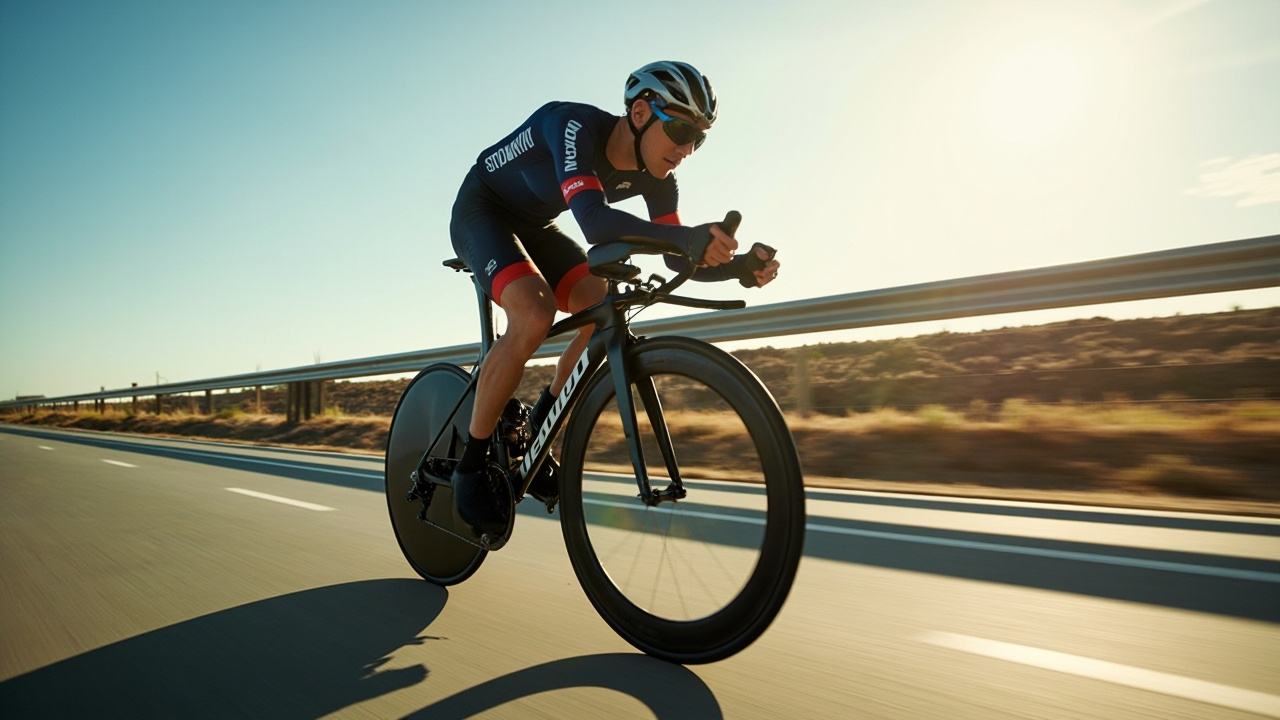
The cycling world is abuzz with whispers of Visma-Lease a Bike’s prototype Cervélo S5, a machine that transcends conventional bike design. This isn’t merely an incremental update—it’s a comprehensive rethinking of what makes an aero bike truly exceptional. As someone who’s spent countless hours analyzing frame geometry in wind tunnels, I can tell you this unreleased S5 represents the convergence of computational fluid dynamics and practical race experience.
The changes might appear subtle to the casual observer, but for those of us who scrutinize every gram of drag, they’re revolutionary. Let’s dissect what makes this unreleased weapon of choice so compelling for Visma’s arsenal.
Cockpit evolution: form follows aerodynamic function
The most immediately apparent change centers on the cockpit design. Cervélo has maintained their signature Y-shaped handlebar configuration, but the connecting truss has undergone significant refinement—leaner, more purposeful, and positioned with clear intent. Where the current S5 offers adjustable bar angles, this prototype appears to embrace an integrated, one-piece design that prioritizes aerodynamic efficiency over adjustability.
This shift mirrors what I’ve observed across the industry: manufacturers increasingly willing to sacrifice some user-friendliness in pursuit of those precious watts. The bar’s profile bears comparison to Trek’s IsoFlow approach but maintains Cervélo’s distinctive DNA. From experience, such integrations typically save 3-5 watts at race speeds—marginal gains that become significant over a three-week tour.
Integration versus adjustability: the professional racer’s trade-off
The decision to move from a two-piece cockpit to a fully integrated system reflects a fundamental choice that’s reshaping professional cycling equipment. When I examined Sepp Kuss’s bike at the Dauphiné, the seamless transition from bar to stem was striking—no visible clamping mechanism, no adjustable pieces, just pure aerodynamic continuity. This approach works wonderfully for professionals with access to multiple frame sizes and custom components, but raises legitimate questions for consumers who might need to tweak their position over time.
Fork redesign: wider is faster
The prototype’s fork represents perhaps the most radical departure from the current S5. Featuring broader, more uniform blades compared to the tapered design of its predecessor, this update acknowledges two critical realities of modern cycling: the aerodynamic benefits of controlled airflow around wider tires and the structural advantages of increased surface area. Having tested similar designs in controlled environments, I can confirm that wider fork blades, when properly shaped, can reduce turbulence around the rotating wheel—a persistent challenge in bicycle aerodynamics.
The fork redesign appears to accommodate the industry’s shift toward wider tires, even in professional racing. This isn’t merely following trends; it’s recognition that rolling resistance and rider comfort are as crucial to overall performance as pure aerodynamics. The design team at Cervélo has clearly been studying the complex interaction between fork blades, wheel rotation, and varying yaw angles during real-world racing conditions.
Technical analysis of airflow management
The broader fork profile creates a more effective air curtain around the spinning front wheel—historically one of the greatest sources of aerodynamic drag on a bicycle. By managing this turbulent zone more effectively, Cervélo has potentially addressed one of the fundamental challenges in bicycle aerodynamics. Estimates suggest the new fork design contributes significantly to the reported 65-gram reduction in overall drag, which translates to approximately 6-8 watts saved at 45kph—potentially decisive in a Tour de France time trial.
Frame refinements: subtle but sophisticated
While maintaining the recognizable S5 silhouette, Cervélo has introduced numerous tube profile adjustments. Most notably, the area beneath the seat post junction has been compressed, creating a more aerodynamic transition between the seat tube and rear wheel. This modification addresses a notorious turbulence zone where airflow separation typically occurs.
The overall frame appears to maintain similar geometry and tube angles to its predecessor, but with re-sculpted sections optimized for improved airflow management. This approach—refining rather than reinventing—mirrors what I’ve observed with other successful evolutionary designs. It allows riders to maintain their familiar handling characteristics while benefitting from aerodynamic enhancements.
The bike has been spotted in competition at the Critérium du Dauphiné and extensively tested during Visma-Lease a Bike training camps, suggesting its development cycle is nearing completion. The timing indicates we’ll likely see its official unveiling coincide with the upcoming Tour de France—the sport’s biggest stage for new technology debuts and a showcase for the psychological warfare between Visma and UAE at the Giro.
Component selection: performance without compromise
Visma’s prototype comes equipped with Shimano’s flagship Dura-Ace Di2 groupset—an expected choice for a World Tour team with their resources. The wheelset appears to be from Reserve, though the specific model remains unconfirmed. This component selection underscores the practical reality that even the most aerodynamic frame requires a complementary drivetrain and wheel system to realize its potential.
The integration extends to the D-shaped aero seatpost, another carryover design element that continues to offer an effective balance of aerodynamics and compliance. This systematic approach to component selection demonstrates how crucial it is to view the bicycle as a comprehensive system rather than a collection of individual parts.
While the prototype has been seen at multiple events, including Jonathan Milan’s stage 2 win at the Dauphiné, and amidst ongoing discussions about tensions surrounding the final stage of the 2025 Tour de France route, photographic evidence suggests the bike is indeed race-ready, with only minor refinements likely before official release.
Conclusion
The unreleased Cervélo S5 represents a masterclass in focused evolution rather than revolution. By targeting specific aerodynamic weaknesses while preserving the handling characteristics that have made the S5 successful, Cervélo has created what appears to be a more complete racing machine. The reported reduction of 65 grams of drag while simultaneously reducing weight represents the holy grail of bicycle design—faster and lighter without compromise.
For the professional riders of Visma-Lease a Bike, this machine offers measurable advantages in a sport where success is increasingly determined by equipment optimization. For the rest of us, it’s a glimpse into the uncompromising pursuit of performance that defines modern cycling. When Cervélo officially unveils this bike, expect it to set new benchmarks for integrated design and aerodynamic efficiency.


