


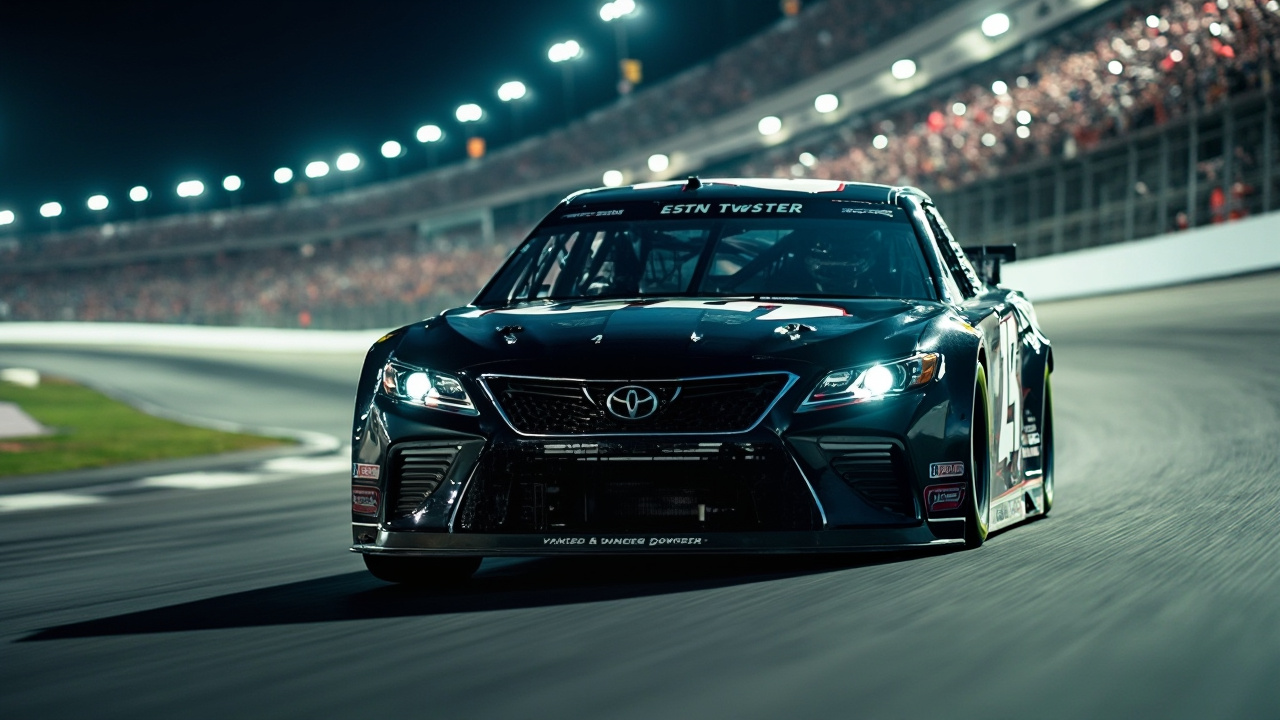
The legal landscape of NASCAR has shifted following a judicial determination rendered on June 5, 2025, by the United States Court of Appeals for the Fourth Circuit. The preliminary injunction previously granted to 23XI Racing and Front Row Motorsports has been vacated, triggering significant consequences for these racing teams’ operational framework and financial stability within the NASCAR structure.
I. Specific issue and matter in dispute
The legal battle originated when 23XI Racing and Front Row Motorsports initiated action against NASCAR and CEO James France. The teams challenged the requirement to execute a release of claims as a condition for charter renewal for the 2025 racing season, alleging this constituted an antitrust violation.
Filed in the U.S. District Court for the Western District of North Carolina on October 2, 2024, the teams contended that the release clause represented an impermissible exercise of monopolistic power that prevented them from pursuing legal action against NASCAR for alleged anti-competitive practices.
II. Key legal arguments presented by the teams
The teams’ legal argument centered on the claim that the mandatory release clause within charter agreements was inherently anti-competitive. They maintained that NASCAR designed this clause specifically to shield itself from potential antitrust litigation, thereby unlawfully restricting teams’ ability to challenge NASCAR’s business practices and governance.
Jeffrey Kessler, representing both racing organizations, argued the lawsuit aimed to transform NASCAR into a more competitive and equitable sporting environment. The teams sought a preliminary injunction to participate under the 2025 Charter Agreement while simultaneously removing the contested release provision. This legal strategy was consistent with other sporting leagues’ reform efforts, as outlined in the NASCAR lawsuit dismissal motion denied case developments.
III. NASCAR’s counter-arguments and defense
NASCAR maintained that the release clause represented a standard contractual provision without any violation of antitrust statutes. The organization argued that requiring a release for past conduct as a condition for business engagement constituted a legitimate exercise of contractual prerogatives that didn’t unduly restrain trade.
Furthermore, NASCAR initiated a counterclaim against 23XI Racing, Front Row Motorsports, and 23XI Racing co-owner Curtis Polk, alleging these parties “embarked on a strategy to threaten, coerce, and extort NASCAR into meeting their demands for better contract and financial terms.” Chris Yates, NASCAR’s lead attorney, emphasized that teams themselves requested the charter system, not NASCAR, and that the plaintiffs’ actions jeopardized the very foundation of this system.
IV. Basis for the ruling in NASCAR’s favor
The appellate court determined that the district court had exceeded its discretion in granting the preliminary injunction. The panel of judges—Paul V. Niemeyer, Steven Agee, and Stephanie D. Thacker—found no legal precedent supporting the teams’ claim that mandating a release constituted an antitrust violation.
Judge Niemeyer, delivering the court’s opinion, stated: “In short, because we have found no support for the proposition that a business entity or person violates the antitrust laws by requiring a prospective participant to give a release for past conduct as a condition for doing business, we cannot conclude that the plaintiffs made a clear showing that they were likely to succeed on the merits of that theory.” The court further observed that the teams attempted to “have their cake and eat it too” by seeking participation under the charter agreement while simultaneously challenging its terms.
V. Immediate practical implications for 23XI Racing and Front Row Motorsports
This judicial determination has particularly acute implications for both racing organizations, potentially jeopardizing their charter status and consequently their financial and competitive viability.
For 23XI Racing, co-owned by Michael Jordan and Denny Hamlin, the ruling threatens guaranteed entry for their three cars driven by Tyler Reddick, Bubba Wallace, and Riley Herbst in all NASCAR Cup Series races. This loss could substantially impair their ability to attract and retain sponsors. Additionally, Tyler Reddick’s contract reportedly contains a provision allowing him to depart as a free agent should 23XI fail to maintain its charter status, creating uncertainty around driver retention similar to other competitive teams’ situations as seen with the recent William Byron contract extension.
Front Row Motorsports faces similar challenges regarding guaranteed entry for its three cars driven by Todd Gilliland, Noah Gragson, and Zane Smith. As a smaller operation, Front Row relies proportionally more on charter income, making it particularly vulnerable to adverse financial consequences should it lose charter status.
VI. Impact on the NASCAR charter system and team agreements
This ruling underscores NASCAR’s contractual authority within the charter system framework, reinforcing its prerogative to impose conditions like release clauses on participating teams. The decision may prompt comprehensive re-evaluation of existing team agreements and the power balance between NASCAR and its constituent teams.
The charters acquired from Stewart-Haas Racing by 23XI and FRM now stand in question and could potentially revert to NASCAR ownership. Chris Yates has asserted that the lawsuit jeopardizes the very continuation of the charter system, suggesting potential structural changes to NASCAR’s operational model moving forward.
VII. Reactions from involved teams and NASCAR
Both 23XI Racing and Front Row Motorsports publicly expressed disappointment with the appellate court’s ruling. Jeffrey Kessler issued a statement noting: “We are disappointed by today’s ruling by the Fourth Circuit Court of Appeals and are reviewing the decision to determine our next steps.” He emphasized the ruling was based on a narrow legal point that doesn’t diminish their confidence in prevailing at the December 1 trial.
While NASCAR hasn’t released a formal public statement, the organization likely views the ruling as affirming its contractual rights and governance authority, consistent with arguments advanced by its legal team throughout the proceedings.
VIII. Broader precedents and impacts on future team-NASCAR relationships
This ruling potentially establishes precedent for future disputes between NASCAR and its teams, particularly regarding contractual obligations and antitrust claims. It may embolden NASCAR to adopt a more assertive stance in enforcing stricter contractual terms and limiting teams’ ability to challenge its authority through litigation.
Long-term ramifications depend on whether the teams pursue further legal avenues, such as petitioning for a rehearing before the entire Fourth Circuit by June 19, 2025, or seeking Supreme Court review. The ultimate resolution of underlying antitrust claims will significantly influence industry dynamics, potentially occurring amid broader motorsport calendar sustainability challenges that all racing series currently face.
This case could trigger comprehensive reassessment of the charter system’s structure and revenue distribution mechanisms, potentially reshaping NASCAR’s financial landscape and competitive equilibrium for years to come.


